
The Home Sale Contingency: Your Equity Bridge to a New Home
Let's talk about one of the most practical (but nerve-wracking) moves in real estate: buying a home that's contingent on selling your current one first.
CONTINGENCIES
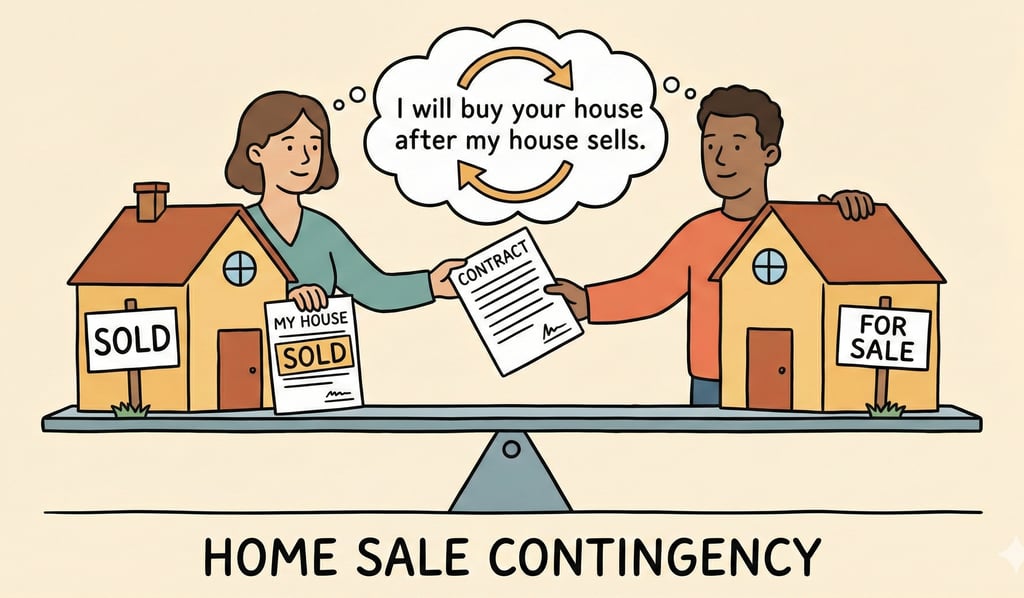
What This Really Means
A home sale contingency means you're making an offer on a new house with one big condition: the deal only goes through after your current home sells. You're essentially saying, "I want to buy your house, but I need my equity from my current home to make it happen."
This isn't about getting a loan approved or passing inspection. This is about timing two major transactions so your money can flow from House A to House B.
Benefits to Buyers
Equity is your down payment. If you've built up $80,000 in equity over the years, that's your ticket to avoiding PMI or getting into a higher price range. Without that cash, you might be looking at a much smaller loan or a completely different house.
Cash flow reality. Most people can't afford two mortgage payments, even temporarily. This contingency prevents you from being house-rich and cash-poor.
Market timing. In a competitive market, this lets you shop seriously while still living in your current home, rather than rushing to sell first and then scrambling to find something.
Benefits to Sellers
You lock in today's price. If the market softens over the next 60-90 days, you've already secured your sale price. No need to worry about reducing your listing price or sitting on the market longer.
You get a serious, qualified buyer. Someone with equity to move has already proven they can successfully buy and maintain a home. They're not new to this game.
Built-in financing strength. Buyers using equity typically have lower debt-to-income ratios and stronger loan applications. There's less risk of financing falling through.
No lowball offers later. You avoid the scenario where your house sits on the market for months, then someone comes in offering $20,000 less because it's been listed so long.
Predictable timeline. While you wait for their home to sell, you know exactly when you need to be out and can plan accordingly. No surprise showings or last-minute scrambles.
Market protection. If mortgage rates jump or economic conditions change, you've already got your buyer locked in at the agreed price.
How the Process Actually Works
Step 1: Your agent writes an offer with a home sale contingency clause that specifies your current address and a timeline for getting it under contract and closed.
Step 2: If accepted, you typically have 30-60 days to get your current home under contract and another 30-45 days for that sale to close.
Step 3: Once your home sale closes and you have your equity check, your purchase of the new home can proceed to closing.
Step 4: Ideally, you coordinate both closings to happen on the same day or within a few days of each other.
What Sellers Think About These Offers
The upside for sellers: Buyers with equity from another home sale are often well-qualified and serious. They're not playing around - they have skin in the game.
The downside: Your house is essentially off the market while waiting for their house to sell. If their sale falls through, you're back to square one.
The reality check: In competitive markets, sellers often prefer offers without this contingency. But in slower markets or with the right price, these offers get accepted regularly.
The Financial Timeline Reality
This process typically takes 60-90 days from offer to new home closing. Your current home needs to go under contract, pass inspections, get appraised, and close. Then that money moves to your new home purchase.
Some buyers try to speed this up by selling first and renting back from their buyers, or by using a bridge loan to access equity early. But the home sale contingency remains the most common approach for people who need their equity to move up.
Bottom Line for Georgia Homeowners
For buyers, the home sale contingency isn't the most exciting way to buy a house, but it's often the most practical. It lets buyers use the wealth they built in their current home to step up to something better, without the financial gymnastics of carrying two mortgages or the stress of selling before they know where they're going.
Yes, it makes the offer less attractive than cash or non-contingent financing. But for many Georgia families, it's the difference between moving up and staying put. And for sellers willing to work with this type of offer, it can actually provide more certainty than waiting for the "perfect" buyer in an unpredictable market.
She Opens Doors
April North is a Licensed Realtor
eXp Realty
Licensed in Georgia #442258
Let's Connect
© 2025. All rights reserved.



April North
💬 Text (470) 428-9188